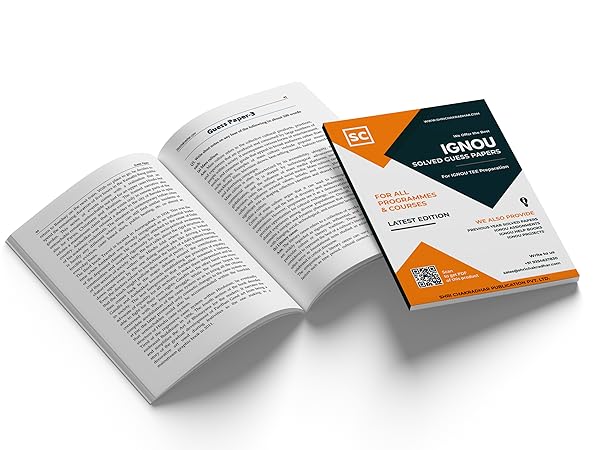
Preparing for the Term-End Examination (TEE) at IGNOU can often feel overwhelming. The syllabus is vast, and there’s always uncertainty about which questions might appear in the exam. Many students spend hours going through textbooks, class notes, and online materials, yet they struggle to focus on the most important topics. This is where an IGNOU solved guess paper becomes a vital study tool. Unlike random notes or generic study guides, a well-prepared guess paper is a targeted collection of exam-focused questions with model answers, designed to make your preparation more efficient and effective.
What Exactly is an IGNOU Solved Guess Paper?
An IGNOU solved guess paper is more than just a set of questions. It is a ready-to-use revision resource, carefully curated to match the pattern, style, and expectations of IGNOU TEE evaluators. What sets these papers apart from ordinary study material is their accuracy: each question is selected based on analysis of past exams, and answers are written in a way that maximizes marks.
These guess papers are crafted by experienced educators, not AI tools, ensuring that content is authentic, grammatically correct, and aligned with official marking criteria. This makes them a reliable resource for focused exam preparation.
How IGNOU Solved Guess Papers Are Created
Creating a high-quality IGNOU solved guess paper involves a structured and methodical approach. Here is how expert educators prepare them:
1. Reviewing Past Question Papers
The first step is to study 5 to 10 years of IGNOU TEE question papers with solutions. This helps identify recurring patterns, commonly asked questions, and frequently tested topics. IGNOU often reuses themes and sometimes repeats questions, making this analysis essential. By reviewing past papers, educators can highlight the areas students should focus on for effective revision, which is why a well-prepared IGNOU guess paper 2026 June is so valuable.
2. Identifying Frequently Asked Questions
Certain questions appear repeatedly across multiple exam sessions. Educators track these questions and include them in the guess paper, giving students a strategic advantage. Focusing on these high-probability questions ensures that students can prioritize their study time efficiently, especially when revision time is limited.
3. Highlighting High-Weightage Topics
Not all topics carry equal weight in TEE exams. Expert educators identify units and blocks with the highest marks allocation and emphasize these in the guess paper. By concentrating on high-weightage topics, students can increase their chances of scoring well without feeling overwhelmed by the full syllabus.
4. Structuring Answers According to IGNOU Standards
A key feature of a guess paper is answer formatting and style. IGNOU evaluators expect answers to be well-organized, clear, and concise. Model answers in guess papers follow the official answer structure, using headings, bullet points, and precise language. This not only teaches students what content to include but also how to present it to earn maximum marks.
5. Ensuring Accuracy and Authenticity
Unlike AI-generated notes, authentic guess papers are plagiarism-free and verified by educators. Every answer is checked for grammatical accuracy and factual correctness. Students can rely on these papers to reinforce their understanding and avoid misleading or incomplete information.
Advantages of Using IGNOU Solved Guess Papers
Using a well-prepared guess paper offers several benefits for TEE preparation:
1. Focused and Efficient Revision
Instead of studying every topic indiscriminately, students can concentrate on questions most likely to appear. This targeted approach saves time and makes revision more productive, especially close to exam dates.
2. Understanding the Exam Pattern
Guess papers help students become familiar with the exam format, question types, and expected answer style. Practicing answers in the right format builds confidence and reduces surprises during the actual exam.
3. Enhanced Answer Writing Skills
Model answers demonstrate the precise language, terminology, and structure that examiners prefer. Regular practice with these answers improves clarity, organization, and presentation skills, which is particularly useful for subjective questions.
4. Better Time Management
One of the biggest challenges in TEE exams is completing answers within the allotted time. Practicing with solved guess papers allows students to gauge the time required for each question and structure their responses efficiently.
5. Boosted Confidence
Knowing that the material is exam-focused, reliable, and verified reduces anxiety. Students feel more confident in their preparation and can approach exams with a calm and focused mindset.
Random Notes vs. Solved Guess Papers
Many students rely on random notes, which may be unorganized or incomplete. Here’s how solved guess papers compare:
| Feature | Random Notes | IGNOU Solved Guess Paper |
|---|---|---|
| Source | Collected by students, often incomplete | Based on 5–10 years of official TEE papers |
| Focus | General, may include irrelevant information | Exam-focused, high-probability questions |
| Answer Format | Unstructured, varies | Structured according to IGNOU marking criteria |
| Accuracy | May contain errors | Verified, plagiarism-free, reviewed by educators |
| Usability | Good for general reading | Ready-to-use for focused exam revision |
This shows that guess papers are more than just study notes; they are a strategic tool aligned with IGNOU’s exam expectations.
Typical Structure of an IGNOU Solved Guess Paper
A well-organized guess paper usually includes:
- Question List: All selected questions, organized by unit or block, often matching TEE numbering style.
- Model Answers: Comprehensive but concise answers highlighting key points and examples.
- Formatting Guidance: Clear headings, subheadings, and bullet points where needed.
- Marking Tips: Some papers indicate marks distribution to help students allocate time and effort wisely.
Tips for Effective Use
To get the most out of a solved guess paper:
- Do Not Rely Solely on Guess Papers: Treat them as a guide. Understand the concepts behind each answer to handle unexpected questions.
- Practice Writing Answers: Actively write answers in the suggested format to improve memory retention and speed.
- Combine with Textbooks and Study Material: Use guess papers along with IGNOU study blocks for a thorough understanding.
- Review Mistakes: Revise any weak areas identified during practice to strengthen your preparation.
Common Misunderstandings
Some misconceptions about guess papers include:
- Guess Papers are Random: False. They are carefully curated based on past TEE papers.
- They Are AI-Generated: False. Authentic papers are prepared by educators with experience in IGNOU.
- They Guarantee Marks: They improve chances but cannot replace understanding of the subject.
- Only for Last-Minute Revision: They are useful throughout the semester for guided preparation.
Conclusion
IGNOU solved guess papers are a powerful tool for effective TEE preparation. They combine years of past exam analysis with structured, examiner-friendly answers. By focusing on repeated questions, high-weightage topics, and proper answer formatting, guess papers provide a roadmap for efficient revision. They help students save time, improve answer-writing skills, reduce exam stress, and build confidence.
However, guess papers should be used alongside textbooks and study blocks, not as a substitute. Understanding the underlying concepts ensures not only good exam performance but also a strong grasp of the subject. When used thoughtfully, IGNOU solved guess papers can transform exam preparation into a more organized, focused, and successful process.